Guitar Body Sizes
When you begin your search for an acoustic guitar, one
of the first considerations should be the size and shape of the body. A
guitar's body size and shape is a major determining factor in the
instrument's final sound, as it relates to both volume and tonal
qualities.
It should be fairly obvious that the larger body sizes
have a greater potential for volume, which may or may not be fully
achieved depending on the materials used and the maker's skill (not all
Dreadnoughts are created equal!).
Variations in shape mean that two guitars with bodies of
roughly the same size, while producing equivalent volume, can sound very
different from one another. Further, as a general rule, large,
"thick-waisted" bodies (such as the Dreadnought or the
"Round-shouldered" Dreadnought), will produce a big sound with a
more open midrange; "tighter-waisted" bodies (such as the
Auditorium, Super Jumbo and Grand Concert) tend to produce a
more "focused" sound with very solid overtones.

Note: at the suggestion of readers, I have arranged
the following body types in order of size, from smallest to largest.
- Boge Quinn, Webmaster
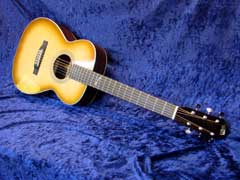
The CB "Single-Ought"
Guitar
The "Single-Ought" guitar
is Chris' interpretation of the classic
"Concert" (0-Size) guitars of the
1930s. Although considered a "Small"
instrument, the CB Single-Ought has a voice
that belies its small size, thanks to Chris'
Forward-Shifted, Hand-Scalloped X-Bracing
pattern, which utilizes a single tone bar in
the lower bout. We think you will agree that
this small-bodied guitar gives up very little
to its larger-bodied siblings, possesses the
sweetness of tone that these Concert-sized
instruments were known for, and has the power
to cut through a microphone or an acoustic jam
session.
| Body Length |
18-1/4" |
| Body Depth @ End Pin |
4-1/4" |
| Body Depth @ Neck |
3-1/2" |
| Upper Bout Width |
10-1/4" |
| Waist Width |
8-1/4" |
| Lower Bout Width |
13-5/8" |
|
|
The CB "Single-Ought" |
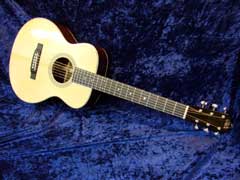
The CB "Tennessee
Traveller" Travel Guitar
The "Tennessee
Traveller" guitar came about at the
request of a client who wanted a guitar
specifically for airplane touring use; a
guitar which would sound as good as
larger-bodied guitars, look good on-stage, and
fit (inside its case or gig bag) into a
standard overhead bin of a passenger aircraft.
| Body Length |
17-1/2" |
| Body Depth @ End Pin |
4-1/16" |
| Body Depth @ Neck |
3-1/4" |
| Upper Bout Width |
10" |
| Waist Width |
8-9/16" |
| Lower Bout Width |
14-1/4" |
|
|
The CB "Tennessee
Traveller" |
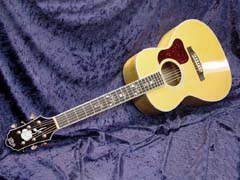
Grand Concert
The Grand Concert is the perfect guitar for fingerstyle playing
and vocal accompaniment. This body size is especially well-suited for lead
playing, and its exceptional focus of tone makes it perfectly
suited for recording and stage performance over microphones. The smaller
body size also makes it a great choice for women, for male players of
slighter build, or for those who for whatever reason prefer a smaller
guitar.
| Body Length |
19-3/8" |
| Body Depth @ End Pin |
4-3/4" |
| Upper Bout Width |
10" |
| Waist Width |
8-3/8" |
| Lower Bout Width |
14-3/4" |
|
|
The CB "Special" |
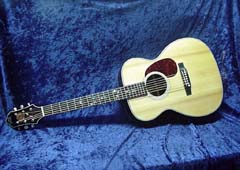
Auditorium Size
An exceptional guitar for fingerstyle players, the Auditorium size also holds its
own in ensemble playing, excels at lead & rhythm playing in the studio, mics
extremely well, and makes an excellent rhythm instrument for fiddle
backup.
| Body Length |
19-3/8" |
| Body Depth @ End Pin |
4-1/8" |
| Upper Bout Width |
11-1/4" |
| Waist Width |
9-3/16" |
| Lower Bout Width |
15" |
|
|
The CB "AuditoriOM" |
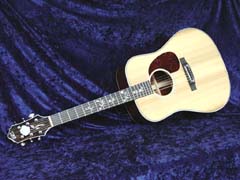
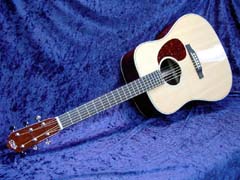
Dreadnought
The Dreadnought-size body is
at its best in ensemble settings, where ultimate power and focus of tone
is required to be heard among other instruments. This potential for power
and clarity has made the Dreadnought guitar the most popular guitar size
today, and the preferred choice of flatpickers (especially Blue Grass
guitarists) who require a guitar that can be heard among
such loud instruments as the fiddle, banjo & mandolin.
| Body Length |
20" |
| Body Depth @ End Pin |
4-7/8" |
| Upper Bout Width |
11-1/2" |
| Waist Width |
10-3/4" |
| Lower Bout Width |
15-5/8" |
|
|
The CB "Herringbone"
The CB "Vintage
'Bone" |
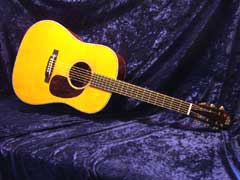
"12-Fret" Dreadnought
The original 12-fret Dreadnought was introduced in 1916, with the more familiar
14-fret model coming in 1934.
The 12-fret Dreadnought is slightly larger than its 14-fret sister, due to the
upper bouts that extend to meet the neck at the 12th fret. This creates a
larger body cavity, which offers more volume potential, and also creates a
slightly "warmer" sound with richer overtones than the 14-fret
Dreadnought. The 12-fret Dreadnought offers great volume for Blue Grass or
ensemble playing, coupled with a more versatile sound for other playing styles.
The 12-fret Dreadnought has found favor with players who appreciate the
projection of the Dreadnought along with the warmer overtones of the 12-fret
body, and with collectors who appreciate the historical significance of the
"original" Dreadnought body style.
| Body Length |
21" |
| Body Depth @ End Pin |
4-7/8" |
| Upper Bout Width |
11-1/2" |
| Waist Width |
10-3/4" |
| Lower Bout Width |
15-5/8" |
|
|
The CB "Vintage
'Elite" |
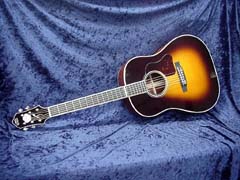
"Round-shouldered"
Dreadnought
The round-shouldered Dreadnought is
a wonderful guitar,
possessed of a somewhat warmer tone than the classic Dreadnought style, and is highly prized by modern Blues and fingerstyle players. The deep, rich bass
offered by the larger body cavity of the round-shouldered Dreadnought makes for
a very well-balanced sound, with clear, strong treble and rich overtones. While
this body size is favored by fingerstyle players, the
extra "punchiness" afforded by the larger body
cavity lends surprising power and clarity for
flatpicking, making the round-shouldered Dreadnought one
of the most versatile body styles available.
| Body Length |
20-1/4" |
| Body Depth @ End Pin |
4-7/8" |
| Upper Bout Width |
11-1/2" |
| Waist Width |
10-3/4" |
| Lower Bout Width |
16" |
|
|
The CB "Model J" |
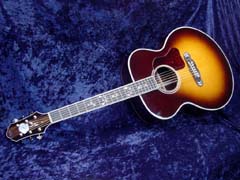
Super Jumbo
The original pre-War Super Jumbo guitars featured a
16-7/8" body with Spruce top and Brazilian Rosewood back & sides; my version features a slightly smaller 16-1/2" body to focus the tone
and eliminate unwanted bass overtones, while maintaining the full depth of a
Dreadnought for power and fullness of tone. The Super Jumbo is the largest and
most powerful guitar I make, and the extra bass
created by the wider and rounder lower bout makes it
the perfect rhythm guitar for ensemble settings.
| Body Length |
20-5/8" |
| Body Depth @ End Pin |
4-7/8" |
| Upper Bout Width |
12-1/2" |
| Waist Width |
10-1/8" |
| Lower Bout Width |
16-1/2" |
|
|
The CB "Super" |
A number of factors should guide you to choosing the
perfect body style for your music: What style of music do
you play? Do you play in bands that require "cutting" tone and
volume? Do you play lead, rhythm, or both? Do you play with a flatpick,
fingerstyle, or both? Are you a male of slight build, or a female who
might require a smaller body size for playing comfort? All these are
considerations that can help you find the perfect guitar for you.
An additional factor that might be overlooked, but should not
be understated, is aesthetics. Let's face it: if we didn't care what our
instruments looked like, then there wouldn't be such a dizzying array of
aesthetic options available both from CB Guitars and from other makers, and all
guitars would be unadorned and purely utilitarian. When you narrow your choices
down to the body styles that best suit you musically, it is perfectly fine to
allow your final choice to be determined by which guitar looks best to you. This
is especially true for the stage performer whose "stage presence" is
visually enhanced by their instrument.
Finally, you should consider how the tone of the body size you
desire is affected by the woods chosen for its construction. Click
here for my article on tone woods. The woods chosen should enhance the
acoustic properties of the desired body size as it relates to the music you want
to play.
This is where the purchase of a custom guitar really comes
through: by carefully considering all the factors of body size and tone woods,
you can help custom-tailor the perfect instrument whose purpose is to enhance
the creation of your music, not a factory-made
"one-size-fits-all" guitar. In this way, your guitar becomes more than
just a tool; it becomes a musical partner that can help you create a lifetime of
your music.
While the array of body sizes and woods available might seem
confusing, choosing the right guitar is really not as daunting a task as it may
seem. I am here to help you, so feel free to email
me with any questions you might have.
Sincerely,

Last modified: May 04, 2021